
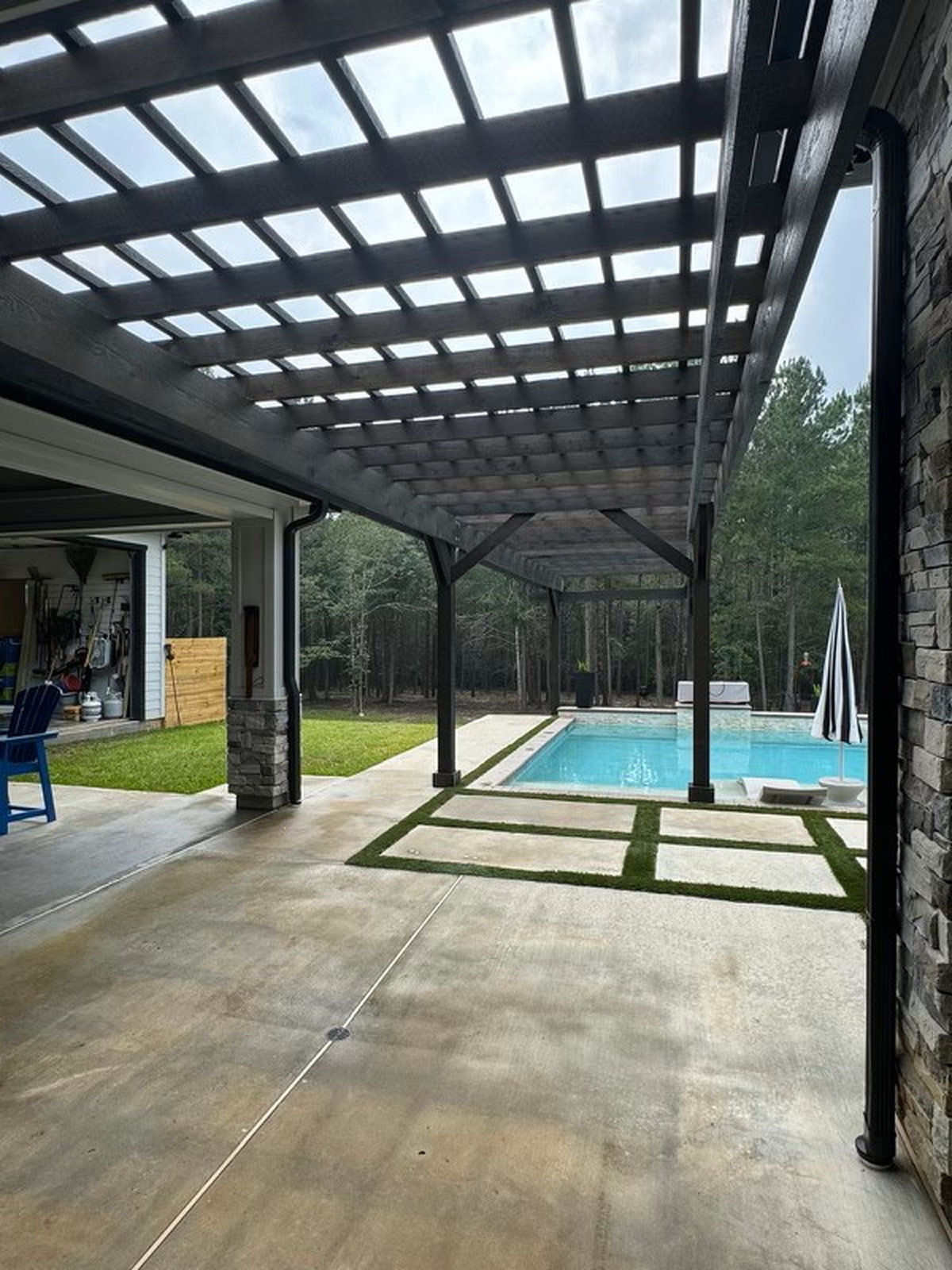
How does humidity affect cedar pergolas in Katy, TX?
Katy's Gulf Coast humidity averaging 75-85% year-round forces cedar wood to expand and contract continuously, creating stress fractures and warping within 8-12 months if left unsealed. This constant moisture absorption also creates ideal conditions for mold spores to colonize the wood surface, turning healthy cedar gray or black. Cedar's natural decay resistance helps, but it's not armor—think of it as buying you time, not immunity.
At Patio Cover Katy, we've seen unsealed cedar pergolas in Cinco Ranch and Fulshear lose their structural integrity within two years of installation. The wood doesn't just look bad—it actually loses strength as moisture breaks down the lignin that holds the fibers together. The fix isn't complicated: apply a penetrating oil-based sealant within 30 days of installation, then reapply every 18-24 months.
Keep your pergola free of leaf litter and organic debris. When wet leaves sit on cedar for more than a week, they create microenvironments where humidity stays above 90%, accelerating mold growth by 3-4 times compared to clean surfaces. A quick monthly sweep with a leaf blower takes five minutes and prevents hours of scrubbing later. For comprehensive information on wood preservation in humid climates, the Texas A&M Forest Service provides detailed guidelines on protecting outdoor wood structures.
What are the seasonal maintenance tasks for cedar pergolas?
Spring requires a deep clean to remove winter accumulation, checking all joints for moisture damage, and applying fresh sealant if the wood absorbs water droplets within 15 seconds. Summer demands UV protection through tinted sealants or stains, plus monthly debris removal to prevent heat-trapped moisture. Fall inspection focuses on tightening hardware loosened by summer expansion, while winter prep ensures drainage channels remain clear to prevent standing water during freeze-thaw cycles.
In March and April, after our mild winters, inspect every joint and beam end—that's where moisture hides and does the most damage. Use a moisture meter if you've got one; readings above 19% mean you need to let the wood dry for a week before sealing. May through July is sealant season. The wood needs to be dry and temperatures between 50-90°F for proper penetration. We recommend scheduling this work in May before the brutal August heat arrives.
Come September and October, walk the entire structure with a wrench and screwdriver. Check that lag bolts haven't backed out and that connections stay tight. Expansion and contraction throughout summer loosens hardware more than people realize—we've measured bolts backing out 1/8 to 1/4 inch in a single season. December through February, make sure nothing's blocking water drainage. Standing water on horizontal beams during our occasional freezes will crack cedar faster than anything else. Our custom patio covers are designed with proper drainage from day one, but maintenance keeps those drainage paths clear.
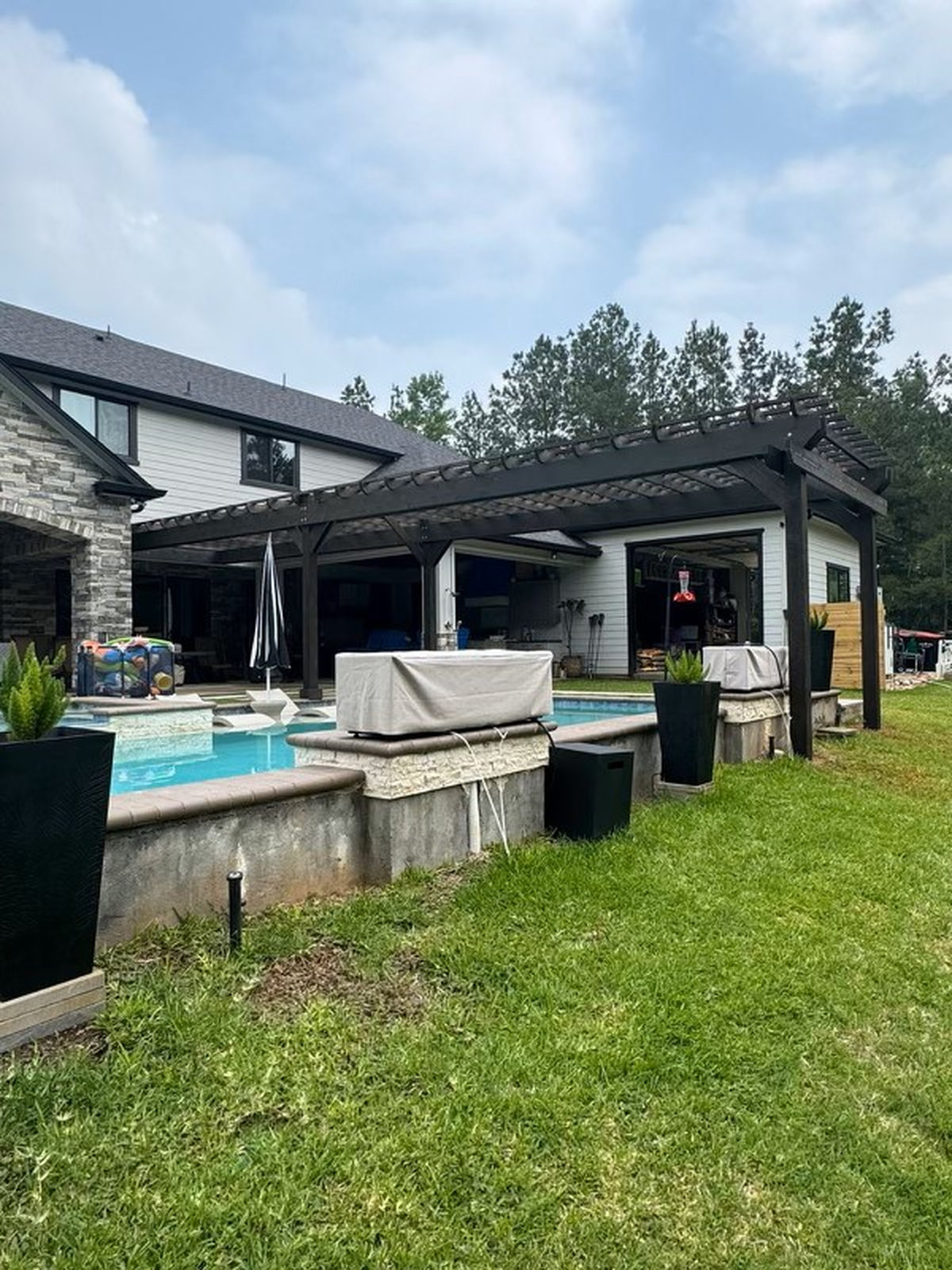
How do I clean and maintain my cedar pergola?
Remove all loose debris with a leaf blower or soft brush, then wash the entire structure using 2 tablespoons of dish soap per gallon of warm water applied with a soft-bristle brush, scrubbing in the direction of the grain. Rinse thoroughly within 10 minutes to prevent soap residue from attracting dirt, and let the wood dry completely for 48-72 hours before applying any sealant or stain.
Start at the top and work down—gravity is your friend here. For stubborn mold spots, mix one part white vinegar to three parts water and let it sit for 15 minutes before scrubbing. This kills mold without the harsh chemicals that can strip cedar's natural oils. Never use a pressure washer above 1200 PSI or closer than 12 inches from the wood surface. We've repaired dozens of pergolas damaged by overzealous pressure washing that shredded the soft spring growth rings right out of the wood.
After rinsing, check for any gray or blackened areas that didn't clean up—these indicate deeper mold penetration or UV damage. A wood brightener product can restore some color, but if the wood feels soft or punky when you press a fingernail into it, that section needs replacement. According to Patio Cover Katy, homeowners who clean quarterly spend about 45 minutes per session, while those who wait a year often need 3-4 hours to remove built-up grime and mold. You can see examples of well-maintained cedar structures in our project gallery.
What protective treatments should I apply to my cedar pergola?
Apply a penetrating oil-based sealant containing UV inhibitors within 30 days of installation, then reapply every 18-24 months depending on sun exposure. Semi-transparent stains provide better UV protection than clear sealants while still showcasing the wood grain, and products with mildewcides specifically formulated for humid climates prevent mold growth between maintenance cycles.
We recommend products with a minimum 250-hour UV resistance rating—anything less won't last through a Texas summer. Oil-based sealants penetrate 1/8 to 1/4 inch into the wood, creating a moisture barrier from within rather than just sitting on the surface like film-forming finishes. Film finishes peel and trap moisture underneath, which actually accelerates rot.
For pergolas in full sun (western or southern exposure), bump up to a semi-transparent stain in the cedar or honey tone range. These contain more pigment particles that reflect UV rays, extending your maintenance interval from 18 months to potentially 30 months. Shaded pergolas under tree cover can use clear penetrating oils and still hit that 24-month reapplication window. One gallon typically covers 200-250 square feet, so a standard 12x12 pergola needs about one gallon for two coats. The USDA Forest Products Laboratory publishes extensive research on wood preservatives and their effectiveness in different climates.
What are the best cleaning methods for cedar pergolas?
Mix 2 tablespoons of mild dish soap per gallon of warm water, apply with a soft-bristle brush scrubbing along the wood grain, and rinse completely within 10 minutes to prevent residue buildup. For mold and mildew, use a solution of one part white vinegar to three parts water, letting it sit for 15 minutes before scrubbing and rinsing. Clean every 90-120 days to prevent organic material from degrading the wood surface.
The key is working with the wood grain, not against it. Cross-grain scrubbing tears up the soft early-growth rings and creates micro-grooves where dirt and mold take hold faster. Use brushes with natural or nylon bristles—never wire brushes or abrasive pads that scratch the surface. For higher sections, get an extension pole instead of using a ladder and scrubbing at awkward angles.
At Patio Cover Katy, we tell customers to treat cleaning like changing the oil in their truck—it's boring maintenance, but skipping it gets expensive fast. A $12 bottle of dish soap and 45 minutes every three months beats a $3,000 replacement in five years. If you're dealing with heavy mold or algae growth, oxygen bleach (not chlorine bleach) mixed at 1 cup per gallon of water works well without damaging the wood fibers. Just keep it off plants and rinse thoroughly. Our Katy patio contractor services include maintenance consultations if you need hands-on guidance.
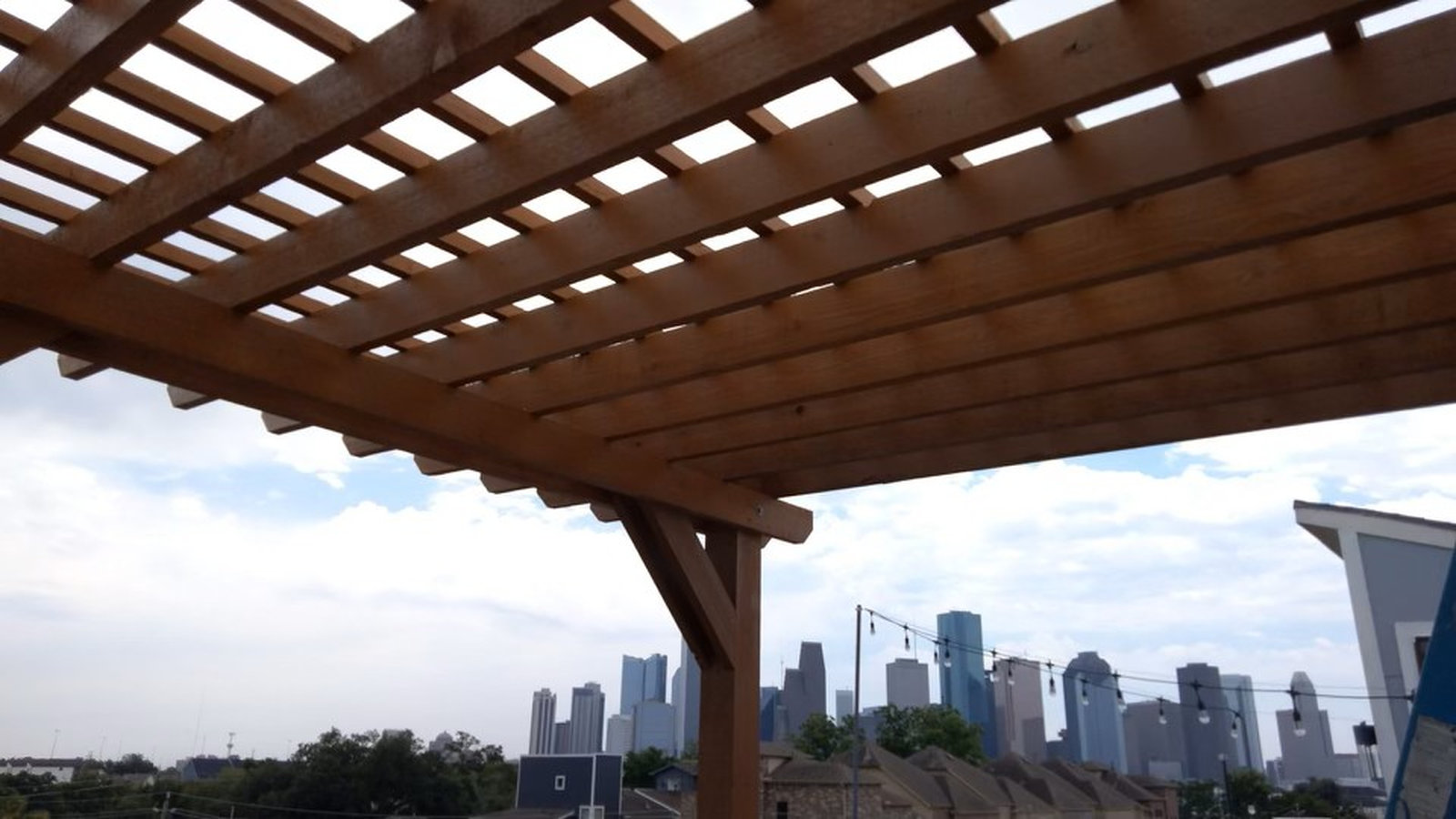
How often should you apply sealant to a cedar pergola?
Apply sealant every 18-24 months for pergolas in full sun or high-wind areas, and every 24-30 months for structures with partial shade or protected locations. Test existing sealant by sprinkling water on the wood—if droplets absorb within 15 seconds instead of beading up, reapplication is overdue regardless of the calendar schedule.
Sun exposure matters more than rain when it comes to sealant breakdown. UV radiation degrades the chemical bonds in sealants, turning them chalky and ineffective. A pergola facing west gets hammered by afternoon sun and will need attention closer to that 18-month mark. Eastern exposure or structures under partial tree shade can stretch to 24-30 months.
Wind is the other factor people miss. Katy gets those Gulf Coast gusts that drive rain horizontally into wood surfaces, accelerating water penetration through compromised sealant. If your pergola is on an exposed lot without fence or vegetation windbreak, plan on the shorter maintenance cycle. The wood itself will tell you what it needs—check three or four spots across the structure since weathering happens unevenly. If half the pergola is still beading water but the sunny side isn't, you can spot-treat just the degraded sections with an extra coat.
What signs indicate that your cedar pergola needs repairs?
Visible cracks wider than 1/16 inch, boards that warp more than 1/4 inch from true, soft or spongy spots when pressed with a fingernail, loose or rusted hardware, and black mold penetrating deeper than surface level all require immediate repair. Addressing these issues within 30 days prevents minor problems from becoming structural failures that require complete beam replacement.
Check connection points first—that's where load stress and moisture damage combine to create the biggest problems. If you can wiggle a beam by hand or if lag bolts turn without resistance, hardware needs replacement and the wood around the connection may have crushed or rotted. Surface cracks are normal as cedar ages, but anything you can fit a credit card into goes deeper than cosmetic and needs attention.
The screwdriver test works for checking wood integrity: push the corner of a flat-head screwdriver into the wood with moderate thumb pressure. Sound cedar resists and leaves only a small dent. Compromised wood lets the screwdriver sink in 1/8 inch or more with little effort. We see this most often on horizontal beams where water sits, and on the south-facing sides where UV breaks down the wood structure before rot even starts. At Patio Cover Katy, about 60% of the repair calls we get could have been prevented if the homeowner had caught the problem during routine quarterly inspections and fixed it with a $30 repair instead of a $500 beam replacement.
How can you protect a cedar pergola from pests?
Apply a borate-based wood preservative like disodium octaborate tetrahydrate to all surfaces during initial construction or within the first 30 days after installation, as it penetrates deep into the wood and remains effective for 5-10 years against termites, carpenter ants, and wood-boring beetles. Keep a 6-inch clearance between soil and any wood members, remove dead vegetation within 2 feet of the structure, and inspect quarterly for mud tubes, small exit holes, or sawdust accumulation that indicates active infestation.
Termites are the primary threat in the Houston area—our mild winters mean they stay active year-round. Subterranean termites build mud tubes up from the ground to reach wood, so those tubes are your early warning system. Check where posts meet concrete footings and where any wood comes close to soil or mulch. If you find tubes, call a pest control company immediately. The damage happens fast once they establish.
Carpenter ants are the second concern. They don't eat wood like termites, but they excavate galleries for nesting, which weakens structural members just as effectively. Look for small piles of sawdust below joints and listen for faint rustling sounds inside beams during quiet evenings—that's usually worker ants moving around. Keep tree branches trimmed back at least 3 feet from your pergola since ants use them as highways. Prevention costs about $40 for a gallon of borate treatment that you can apply yourself. Termite damage repair starts around $1,500 and goes up from there depending on how much wood needs replacing.
Pro Tip from Patio Cover Katy: The 15-second water test tells you everything. Sprinkle water on your pergola beams every six months—if the wood darkens and absorbs the water in under 15 seconds, your sealant is done and you're on borrowed time. Fresh sealant keeps water beading up for 30-45 seconds. This simple test catches problems before they become expensive, and it takes less time than checking your tire pressure.