
What are the benefits of Alumawood patio covers in Houston?
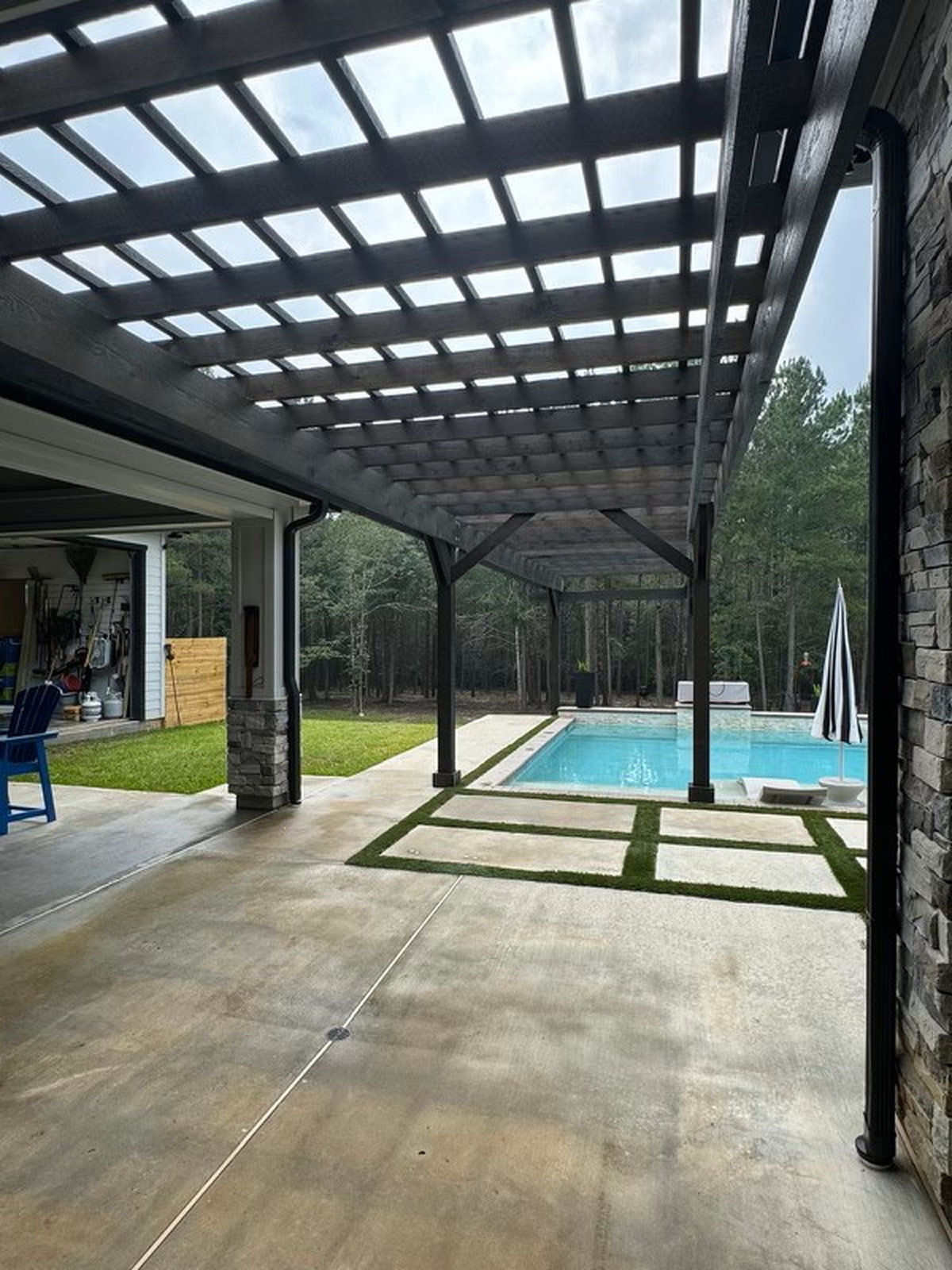
Alumawood patio covers resist Houston's punishing humidity without rotting, warping, or attracting termites. They're engineered to handle winds up to 130 mph and reflect up to 70% of solar heat, keeping your patio 15-20 degrees cooler than wood alternatives. This aluminum construction eliminates the need for staining, sealing, or pest treatments.
We install these structures knowing they'll face August humidity topping 90% and summer temperatures over 100 degrees. Unlike traditional wood, Alumawood won't swell when moisture creeps in or crack when the sun beats down. The material itself is powder-coated aluminum formed to look like wood grain, giving you the aesthetic without the headaches.
At Patio Cover Katy, we've seen Alumawood structures withstand everything Houston throws at them—from tropical storms to relentless UV exposure. The powder coating comes with a 20-year warranty, and the structural integrity lasts decades longer. You're looking at a one-time investment that won't demand weekend maintenance every spring. For more details on our engineered solutions, check out our Texas patio cover engineering guide.
What are the disadvantages of wood patio covers?
Wood patio covers in Houston require staining or sealing every 2-3 years to prevent rot, warping, and termite damage. The region's 90% summer humidity accelerates decay, while intense UV exposure causes cracking and splitting. Maintenance costs typically add $500-800 annually to preserve structural integrity and appearance.
Houston's climate is brutal on wood. The constant moisture creates ideal conditions for rot and mold, while termites view untreated lumber as an all-you-can-eat buffet. Even pressure-treated wood needs regular applications of sealant to maintain its protective barrier against the elements.
According to the Texas A&M Forest Service, wood structures in humid climates deteriorate 40% faster than in dry regions. That means your beautiful cedar or redwood patio cover starts showing stress within 3-5 years without diligent care. Checking for soft spots, re-staining, replacing warped boards—it becomes a recurring project rather than a set-it-and-forget-it structure. If you're looking at alternatives, our custom patio covers include low-maintenance options designed specifically for Gulf Coast conditions.
How does climate affect the choice between Alumawood and wood patio covers?
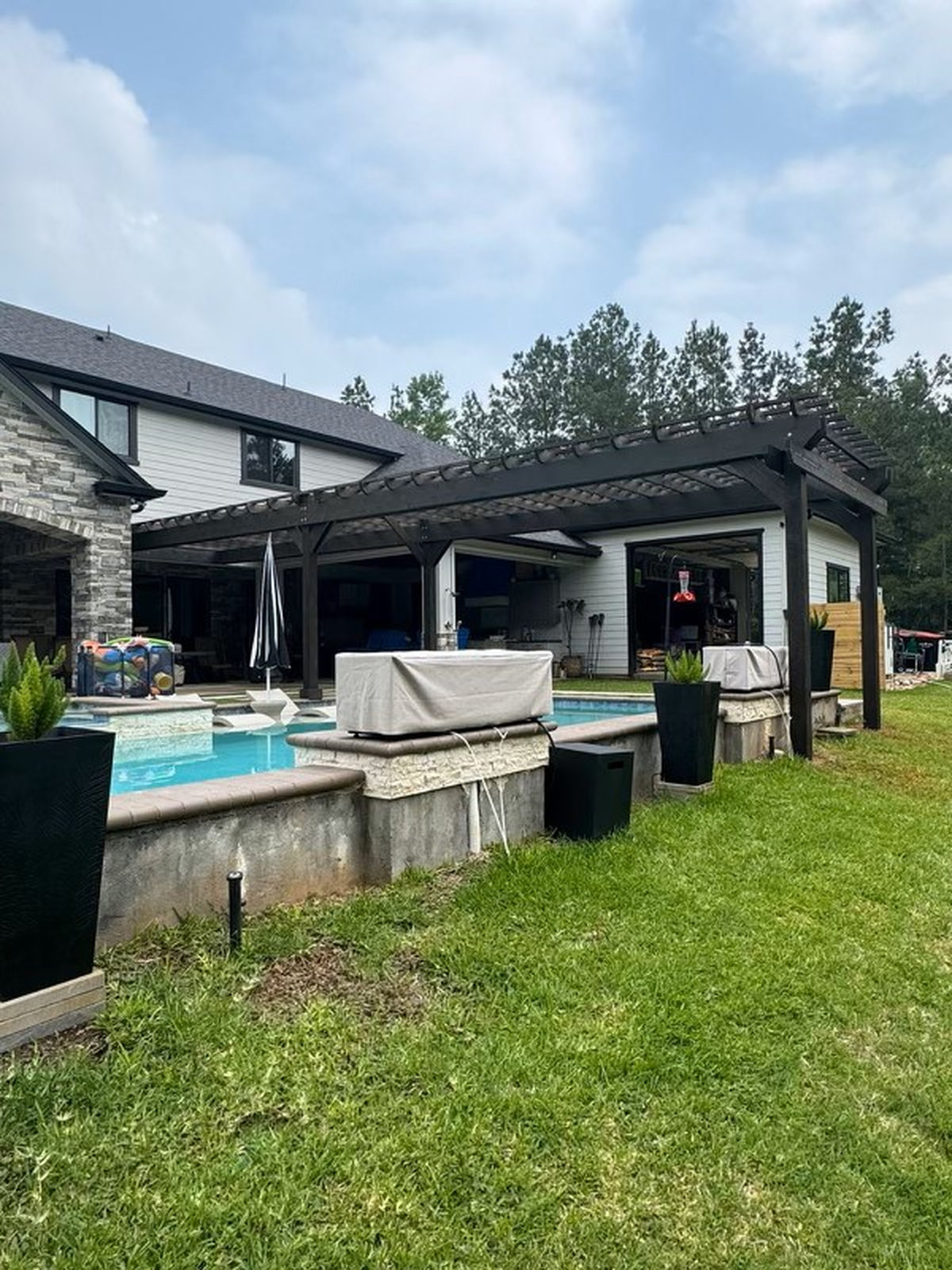
Houston's average humidity of 75% and annual rainfall of 53 inches make Alumawood the more resilient choice. Wood absorbs moisture, expanding and contracting with weather changes, which leads to warping within 3-5 years. Alumawood's aluminum construction remains dimensionally stable regardless of humidity or temperature fluctuations.
The real test happens during our summer months when heat and humidity hit simultaneously. Wood patio covers soak up moisture overnight, then bake in 95-degree heat the next afternoon. This constant expansion and contraction stresses the joints and fasteners, creating gaps where water infiltrates deeper into the structure.
Alumawood doesn't play that game. The material won't absorb water, so there's no swelling or shrinking. Hurricane season brings another consideration—our structures need to handle sustained winds and driving rain. We engineer Alumawood installations to meet local wind load requirements, something wood struggles with as it weakens over time. Homeowners in Cinco Ranch and Fulshear see this firsthand when comparing 10-year-old installations.
What are the costs associated with Alumawood vs wood patio covers in Houston?
Alumawood patio covers cost $15-30 per square foot installed, while wood runs $10-25 per square foot. However, wood's annual maintenance—$500-800 for staining, sealing, and repairs—closes the price gap within 5-7 years. Alumawood's minimal upkeep makes it more economical over a typical 20-year lifespan.
Let's break down real numbers. A 300-square-foot Alumawood patio cover runs $4,500-9,000 installed. The same size in cedar or redwood costs $3,000-7,500 upfront. Looks like wood saves you money, right? Not when you factor in maintenance.
At Patio Cover Katy, we walk clients through total cost of ownership. Wood requires professional staining every 2-3 years at $600-800, plus repairs for warped boards and weather damage. Over 15 years, that's $3,000-4,500 in maintenance alone. Alumawood? Maybe $200 for occasional cleaning. The initial premium disappears fast. For transparent pricing on your specific project, reach out through our contact page or call (281) 954-0079.
Which patio cover is better for energy efficiency in Houston?
Alumawood patio covers reflect 65-70% of solar radiation, reducing temperatures beneath the structure by 15-20 degrees compared to wood. This thermal performance can lower adjacent indoor cooling costs by 10-15% during Houston's brutal summer months. Wood absorbs heat and provides minimal thermal break between sun and living space.
Energy efficiency matters when your AC runs 8 months a year. Alumawood's powder-coated aluminum surface acts like a heat mirror, bouncing solar energy back before it reaches your patio or the exterior walls of your home. Wood, being a natural material, actually absorbs and retains heat, then radiates it back out throughout the evening.
According to the U.S. Department of Energy, reflective roofing materials can reduce cooling costs by up to 15% in hot climates. We've measured surface temperatures on Houston patios—wood covers hit 130-140 degrees in July, while Alumawood stays around 100-110 degrees under identical conditions. That 30-degree difference translates to real savings on your electric bill. Homeowners in Sugar Land and Cypress typically see their investment pay back through energy savings within 7-10 years.
How do installation times differ between Alumawood and wood patio covers?
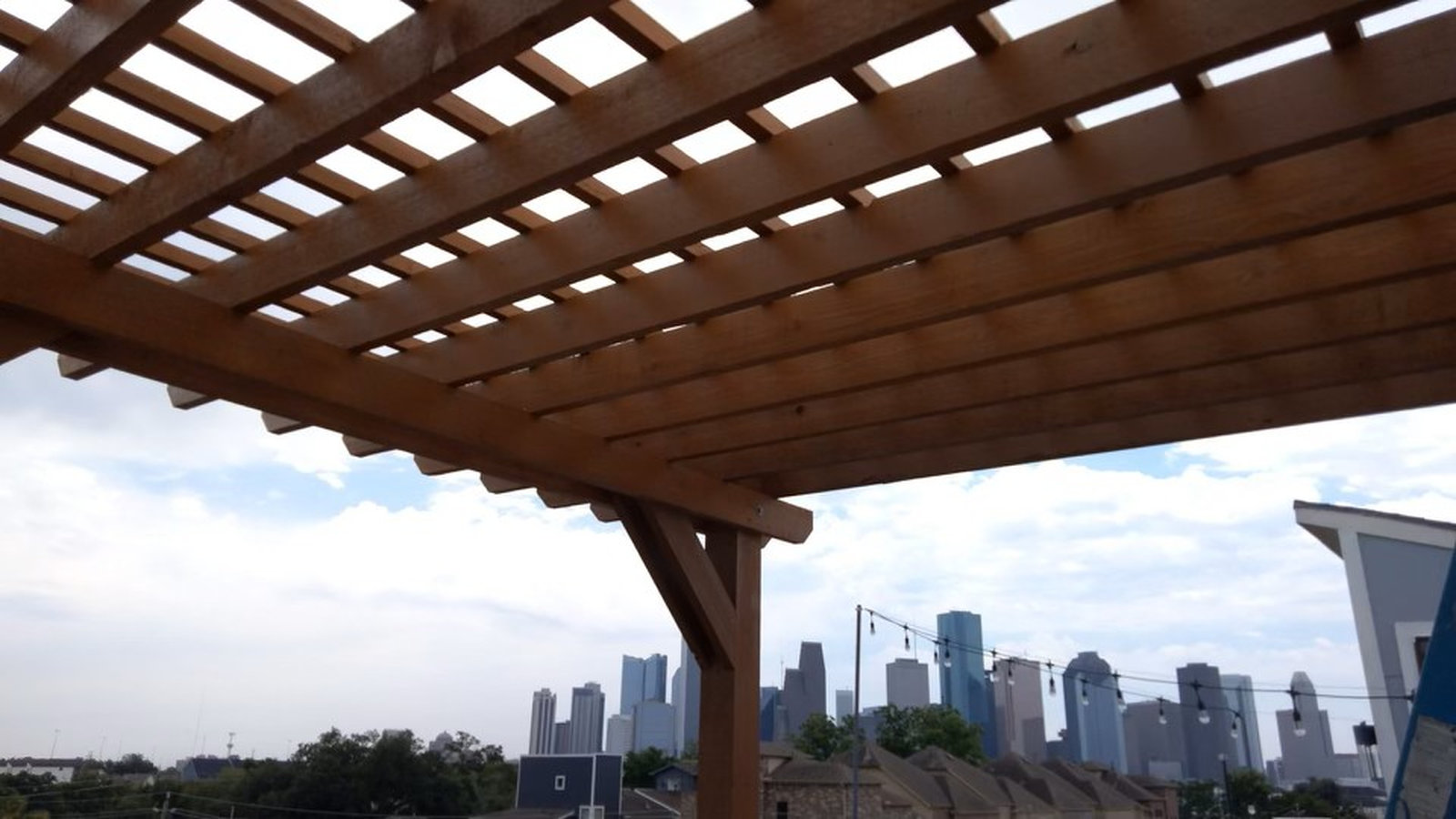
Alumawood installations take 2-5 days from start to finish, while wood patio covers require 5-7 days due to cutting, treating, staining, and drying time. Prefabricated Alumawood components arrive ready to install, eliminating on-site treatment and finishing work that wood demands.
Time is money, and time without your backyard is frustrating. Alumawood components come from the manufacturer precision-cut and powder-coated, ready to bolt together. We show up, set the posts, secure the beams and rafters, and you're enjoying shade within a week.
Wood installations move slower because everything happens on-site. Cutting, fitting, sanding, applying stain or sealant—each step needs completion before moving forward. Then the stain needs 24-48 hours to cure before we can finish assembly. Weather delays stretch timelines further since we can't apply finishes in high humidity or rain.
At Patio Cover Katy, we've completed Alumawood projects in as little as 2 days for straightforward designs. Wood installations rarely finish that quickly, even for experienced crews. When you're planning outdoor entertaining or just want your space back, those extra days matter. Check out our recent Katy patio cover project to see what's possible.
What maintenance does each patio cover type require?
Alumawood requires washing with soap and water 1-2 times annually to remove dirt and pollen. Wood demands staining or sealing every 2-3 years, annual inspections for rot and pests, board replacement as needed, and immediate treatment of any water damage or splitting.
The maintenance gap is where Alumawood really proves its value. Your entire annual maintenance routine involves spraying it down with a garden hose and maybe wiping off stubborn dirt. No chemicals, no sanding, no protective gear required. Done in 30 minutes.
Wood patio covers become a recurring project. Spring inspections check for winter damage, soft spots indicating rot, termite activity, and finish deterioration. Every few years, you're either doing the staining yourself—full weekend project—or paying $600-800 for professionals. Miss a maintenance cycle, and damage accelerates fast in Houston's climate.
We tell homeowners in Richmond and The Woodlands to think about their weekends. Some folks enjoy the ritual of caring for wood. Most would rather spend Saturday with family than up on a ladder with a paint sprayer. For those who want more outdoor living and less outdoor maintenance, visit our gallery to see low-maintenance options.
How do HOA restrictions affect material choice?
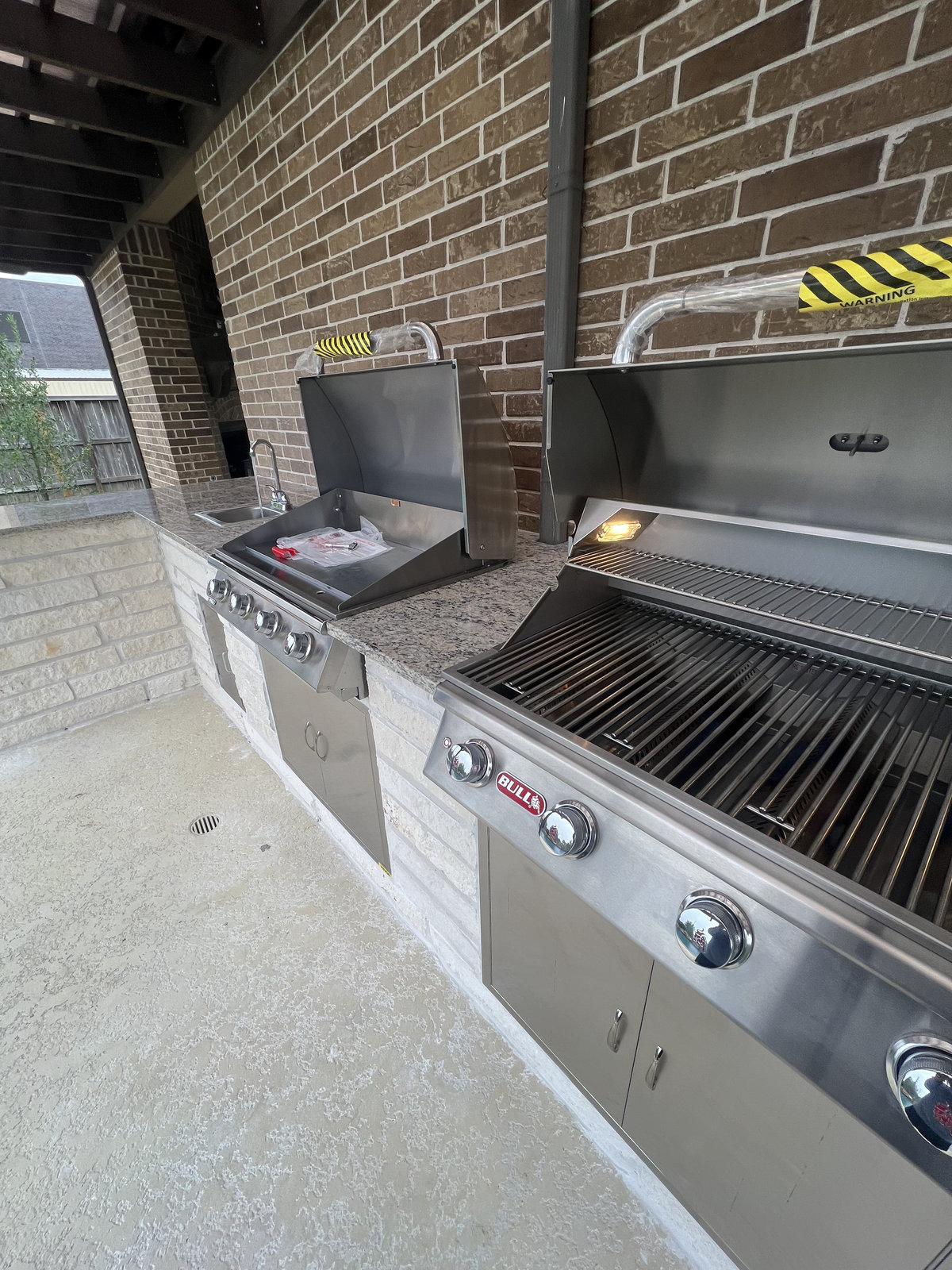
Most Katy-area HOAs approve both Alumawood and wood patio covers, but 60-70% specify color palettes and architectural compatibility. Alumawood offers 15-20 standard colors that mimic wood grains and typically satisfy HOA aesthetic requirements, while actual wood may face restrictions on staining and weathering appearance.
HOA approval can make or break your project timeline. We've navigated hundreds of HOA submissions across Katy, and here's what trips people up: color drift. Wood changes appearance as it weathers and ages, which some HOAs flag during annual inspections. Alumawood maintains its color permanently.
Before purchasing materials, grab your HOA's architectural guidelines. Most require submissions showing color samples, engineering specs, and site plans. At Patio Cover Katy, we provide HOA submittal packages that include manufacturer specs and color charts—documentation that speeds approval.
Communities in Cinco Ranch and similar planned developments maintain strict aesthetic controls. Alumawood's consistent appearance and wide color selection usually sail through, while wood may require specific species or stain colors that limit your options and increase costs.
Do both materials handle Houston's severe weather equally?
Alumawood handles Houston's severe weather better, with engineering ratings for 130+ mph winds and zero degradation from moisture. Wood weakens over time as humidity causes micro-cracking and rot, reducing wind resistance by 20-30% within 5-7 years unless maintained aggressively.
When tropical storms roll through, structural integrity isn't theoretical—it's survival. Alumawood's bolted connections and solid aluminum beams maintain full strength regardless of weather exposure. The material doesn't absorb water, so freezing temperatures (yes, we get them occasionally) won't cause expansion damage.
Wood structures depend entirely on maintenance for weather resistance. A well-maintained wood patio cover performs admirably. But skip a sealing cycle, and water infiltrates the grain. Freeze-thaw cycles create internal cracks. UV exposure breaks down lignin, weakening the cellular structure. Within a decade, you're looking at compromised load-bearing capacity.
We engineer every installation to meet Texas wind load requirements—that's non-negotiable. But Alumawood gives us confidence the structure will meet those specs 20 years from now, not just on installation day. For detailed engineering standards, see our engineering guide for Texas patio covers.
Pro Tip: According to Patio Cover Katy, always verify your contractor pulls proper permits and provides engineered drawings for HOA and city approval. Unpermitted structures can cost you thousands in fines and force expensive removals, regardless of material quality.